Expert Insights on Spine Imaging and Interventional Treatments
A comprehensive educational evening featuring Dr. Vikas Agarwal discussing spine imaging and percutaneous interventions for spine-related pain, providing patients and families with valuable insights into the latest advances in spine care.
SCOLI
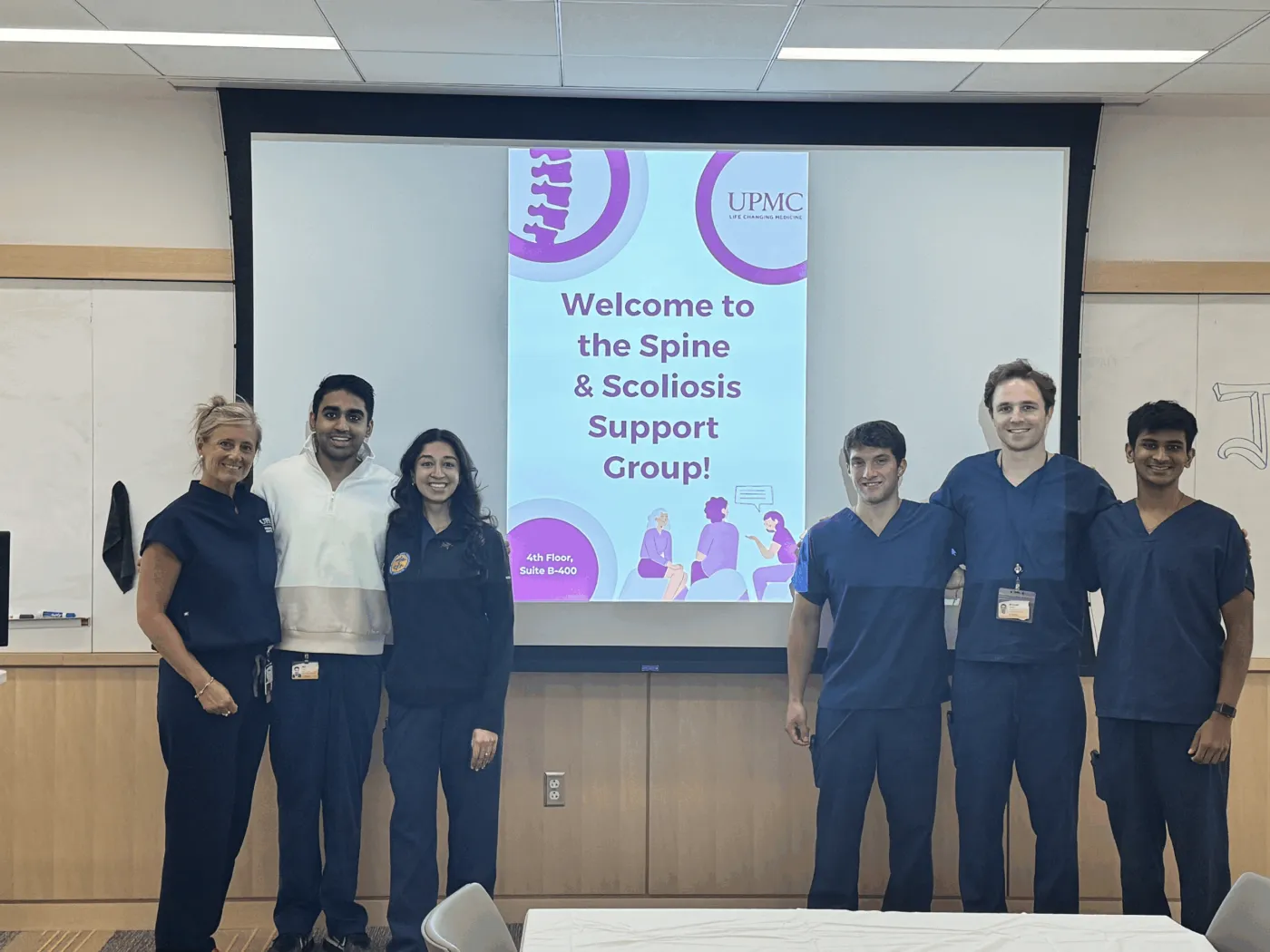
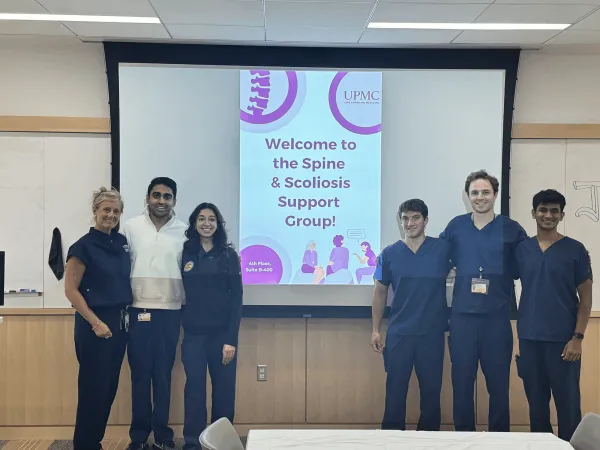
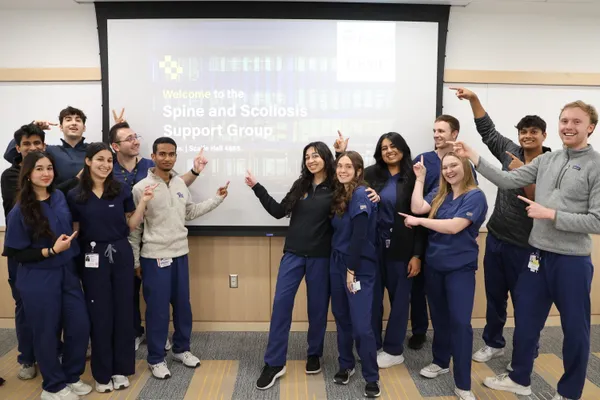
Pictured (left to right): Meredith Anderson, BSN; Avi Gajjar, MBA; Ayesha Akbar Waheed, MBBS; Ben Carnovale, BS; Samuel Wakelin, BS; Janam Patel, BS. Not pictured: Armani Manov
PITTSBURGH, PA — August 8, 2025 — A comprehensive educational evening featuring Dr. Vikas Agarwal discussing spine imaging and percutaneous interventions for spine-related pain, providing patients and families with valuable insights into the latest advances in spine care.
Spine and Scoliosis Support Group Meeting
Featured Speaker
Dr. Vikas Agarwal (Provider Profile)
Vikas Agarwal, MD, MBA
Professor and Vice Chair of Radiology
Chief, Neuroradiology
Director, Spine Intervention
University of Pittsburgh Medical Center
@VikasAgarwalMD
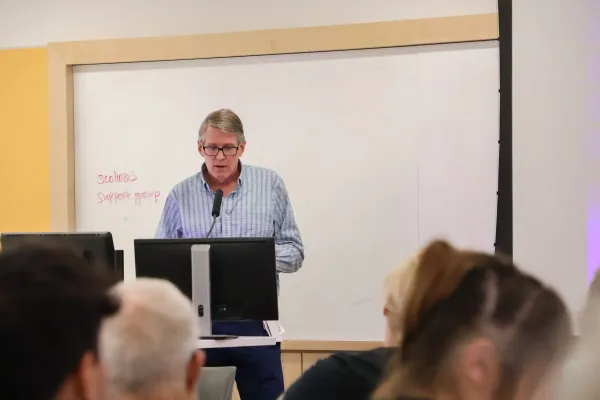
Our quarterly Spine and Scoliosis Support Group meeting on August 7, 2025, featured an outstanding presentation by Dr. Vikas Agarwal, who provided our community with comprehensive insights into spine imaging and percutaneous interventions for spine-related pain. The educational evening drew patients, families, and caregivers seeking to better understand the latest advances in spine care and pain management options.
Understanding Spine Anatomy and Pathology
Dr. Vikas Agarwal began his presentation by reviewing normal spinal anatomy, covering both radiographic and MRI anatomy essential for understanding spinal conditions. He discussed the common patterns of degenerative disease, noting that the most frequent extradural pathology occurs at L4/5 and L5/S1 in the lumbar spine and C4/5, C5/6, and C6/7 in the cervical spine. Thoracic degenerative changes, while present, are often less symptomatic.
The presentation emphasized that spinal stenosis is multifactorial, often resulting from the combination of disc bulge, facet hypertrophy, and ligament thickening that together compromise the spinal canal and nerve root exit zones.
Radiculopathy and Its Clinical Presentation
Dr. Vikas Agarwal provided detailed explanations of spinal radiculopathy, distinguishing between the neurological condition of blocked nerve conduction and radicular pain resulting from nerve irritation. He outlined the specific clinical presentations for different nerve levels:
Cervical Radiculopathy:
- C5: Neck/shoulder pain with deltoid weakness
- C6: Radial arm pain with biceps weakness
- C7: Dorsal forearm pain with triceps weakness
- C8: Medial forearm pain with finger flexor weakness
Lumbar Radiculopathy:
- L3: Hip flexion weakness with anterior thigh numbness
- L4: Knee extension weakness with medial foot numbness
- L5: Big toe dorsiflexion weakness with lateral leg numbness
- S1: Ankle plantarflexion weakness with posterior leg numbness
Interventional Treatment Options
A significant portion of Dr. Vikas Agarwal’s presentation focused on the various percutaneous procedures available to treat spine-related pain. He outlined a comprehensive treatment algorithm based on the underlying pathology:
Treatment Approaches by Condition:
- Radiculopathy: Transforaminal epidural steroid injections (TF ESI) and radiofrequency ablation (RFA)
- Spinal Stenosis: Interlaminar epidural steroid injections (IL ESI) and minimally invasive lumbar decompression (MILD)
- Facet Dysfunction: Facet joint injections/medial branch blocks and radiofrequency ablation
- Discogenic/Vertebrogenic Pain: Nucleoplasty, basivertebral nerve ablation, and kyphoplasty
- SI Joint Dysfunction: SI joint injections and radiofrequency ablation
Adult Spinal Deformity Considerations
Dr. Vikas Agarwal addressed adult spinal deformity, explaining that the most common presentations include adult idiopathic scoliosis and degenerative scoliosis, along with kyphotic deformities and spondylolisthesis. He emphasized the importance of full-length standing radiographs for proper assessment and discussed how CT, CT myelography, and MRI are used strategically for symptom evaluation and pre-surgical planning.
Clinical Case Examples
The presentation included several compelling clinical cases that illustrated the decision-making process for different interventional approaches. These real-world examples helped attendees understand how imaging findings correlate with clinical symptoms and guide treatment selection.
Multidisciplinary Care Approach
Throughout his presentation, Dr. Vikas Agarwal emphasized the critical importance of comprehensive multidisciplinary care in spine treatment. He highlighted the collaborative approach between interventional radiologists, neurosurgeons, orthopedic surgeons, pain management specialists, and physical therapists in optimizing patient outcomes.
“The University of Pittsburgh Department of Neurological Surgery’s Spine and Scoliosis Patient Support Group provides a supportive and educational environment for patients and families facing spinal disorders. Our quarterly meetings feature specialists from various disciplines, enabling patients and their loved ones to ask questions about their conditions and explore different aspects of care.”
Resources and Next Steps
For those interested in learning more about spine care and treatment options, we encourage you to explore these resources:
- UPMC Neurosurgical Spine Services
- Dr. Vikas Agarwal’s Provider Profile
- Minimally Invasive Spine Surgery Program
Looking Forward
Our next quarterly meeting is scheduled for November 2025. We encourage anyone diagnosed with a spine condition or scoliosis, as well as their family members, to join us regardless of hospital affiliation or stage of treatment. These sessions serve as a beacon of hope and understanding, illuminating the multifaceted nature of spinal conditions and the continuous journey toward improved quality of life.
The support group is bolstered by the Spine Computational Outcomes Learning Institute (SCOLI), a research organization dedicated to advancing neurosurgical patient care through cutting-edge clinical and translational science.
Contact Information: To join our support group or learn more about upcoming meetings, contact Karen Hlavac at hlavackp@upmc.edu or call 412-647-3604. Meetings are held quarterly on Thursdays at 6:30 p.m. in the University of Pittsburgh Department of Neurological Surgery’s main conference room, located on the fourth floor of UPMC Presbyterian.