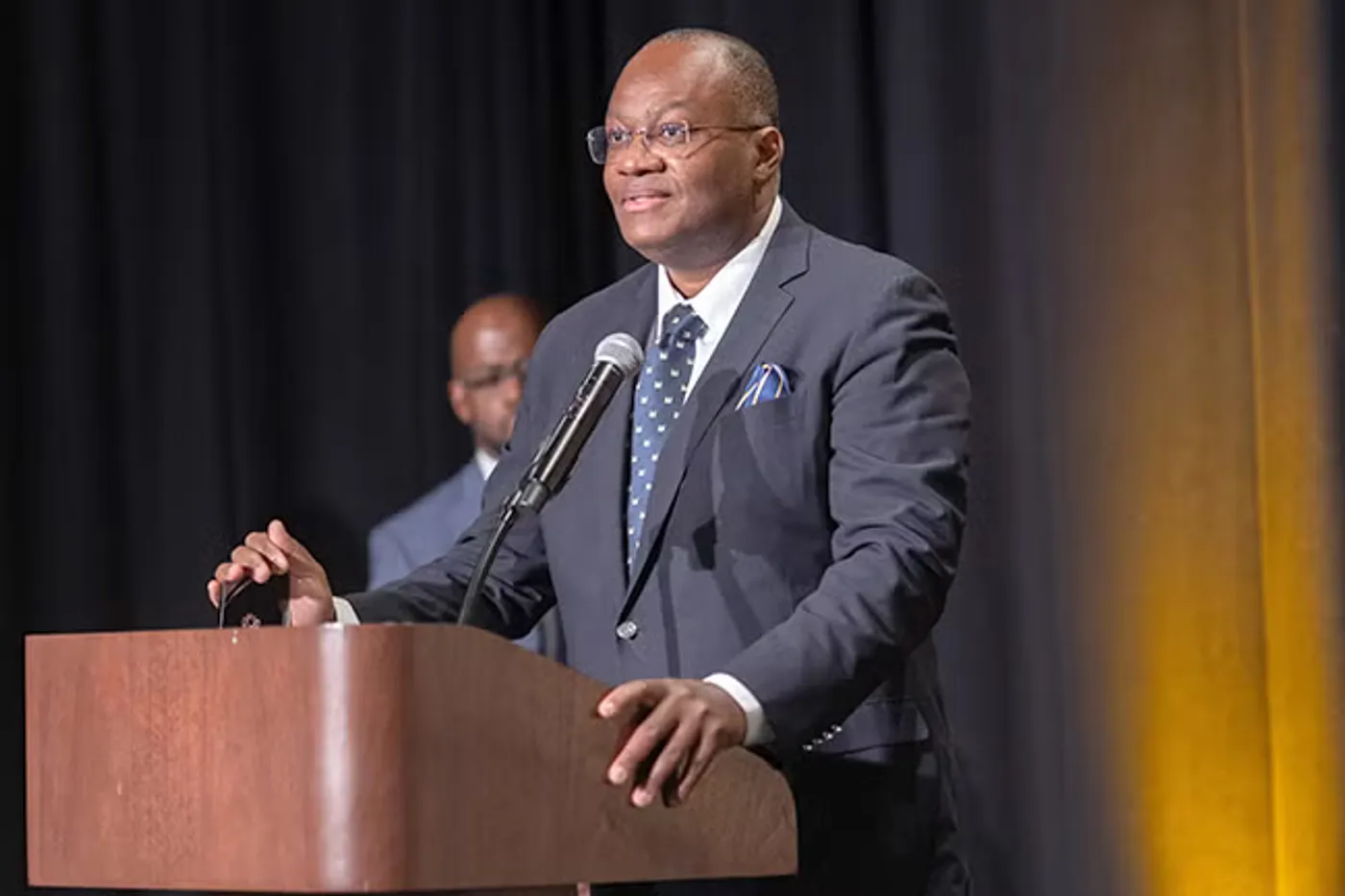
SCOLI Co-Director Dr. D. Kojo Hamilton was featured in Geek Insider on how artificial intelligence and predictive analytics are changing clinical decision-making in spine surgery. The article, published July 31, 2026, looks at the work of the Spine Computational Outcomes Learning Institute and what it means for surgeons and patients as computational tools move from research into everyday practice.
Planning Before the Operating Room
Dr. Hamilton describes a shift in where the hardest decisions get made. With high-resolution imaging and biomechanical modeling, surgical scenarios can now be simulated weeks before a procedure. Approaches are compared, weak points are identified, and much of the uncertainty that once surfaced mid-operation is resolved during planning instead. Fewer unknowns in the operating room mean fewer preventable complications.
Risk That Reflects the Individual Patient
Predictive models allow surgeons to assess risk objectively rather than by impression alone. That matters most for the patients whose choices are hardest: older adults with severe deformity weighing a demanding operation against continued decline. As Dr. Hamilton puts it:
Two patients with the same diagnosis can have very different risks.
Tailored risk profiles support more honest comparisons between aggressive and conservative approaches, and they give patients a clearer picture of what a given path is likely to mean for them.
Computational Fluency, Human Responsibility
The article closes on a point central to SCOLI’s mission: these systems are advisors, not authorities. Surgeons need enough computational fluency to interpret what a model is saying, understand where it is uncertain, and recognize when it should be overruled. The final decision, and the relationship with the patient, stays with the clinician.
About SCOLI
Co-directed by Dr. Nitin Agarwal and Dr. D. Kojo Hamilton, the Spine Computational Outcomes Learning Institute works across three areas: computational outcomes using machine learning and radiomics, multidisciplinary science spanning neurosurgery and allied fields, and patient education that translates complex findings into language patients can act on.
Read the full article at Geek Insider.
For media inquiries or research collaboration, contact [email protected].