Bike Crash to Remarkable Recovery: Bob Keeley's Journey
At 57, Bob Keeley doesn't do anything halfway. But when a mountain biking accident left him with a broken neck, he had to find a new kind of strength — and the right medical team to help him get back to his active lifestyle.
SCOLI
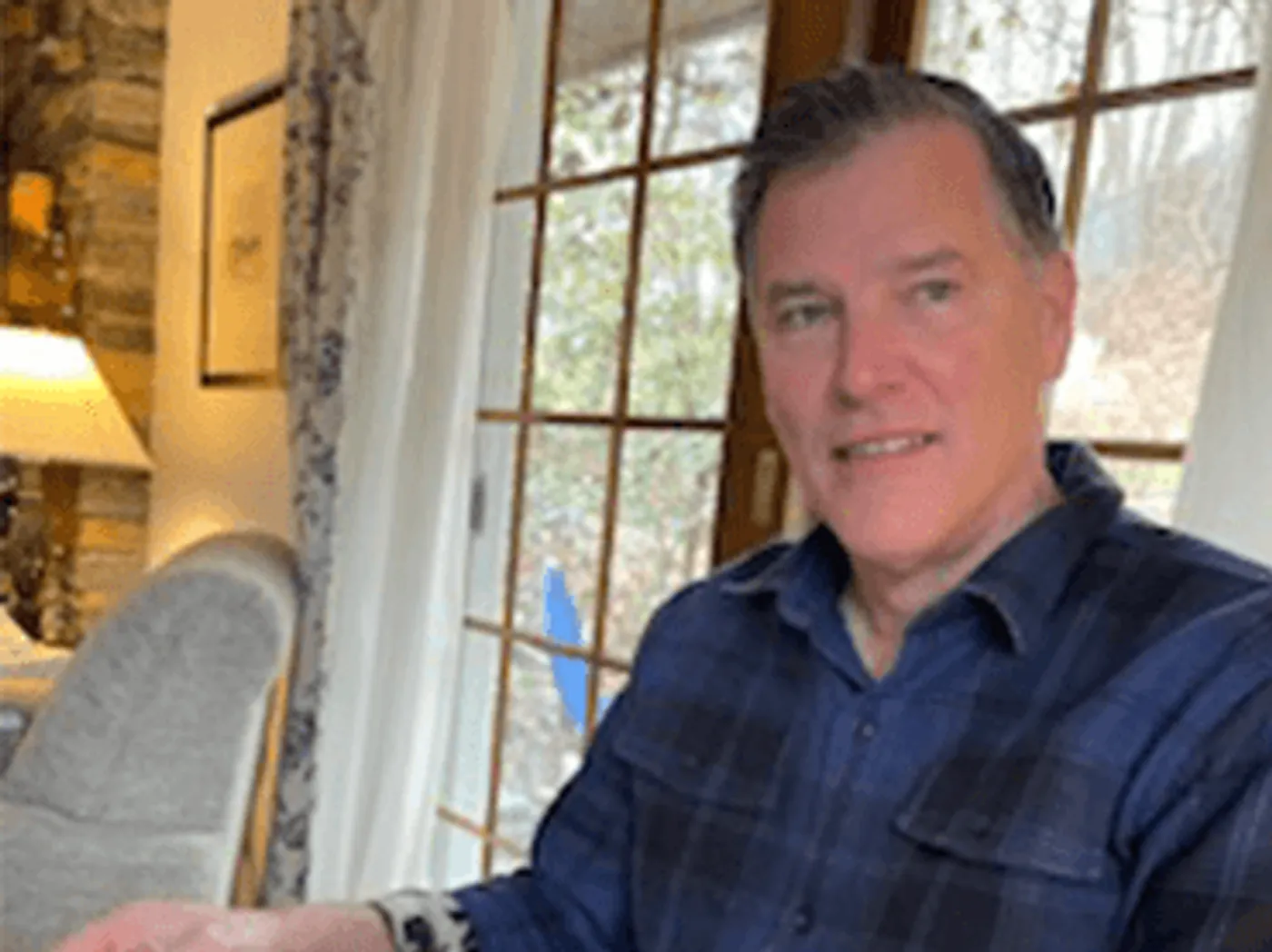
At 57, Bob Keeley doesn’t do anything halfway. But when a mountain biking accident left him with a broken neck, he had to find a new kind of strength — and the right medical team to help him get back to his active lifestyle.
The Unexpected Fall
For someone who describes himself as “hardcore” in everything he does, Bob Keeley was taking an uncharacteristically easy ride down a mountain bike trail at Snowshoe Resort in West Virginia last June when disaster struck. In a sudden accident, he flipped his bike and landed in a sitting position.
“I had sharp pain in my right shoulder, so I thought I tore my rotator cuff,” Bob recalls. “I also had tingling in my right arm and foot.”
The reality was much more serious. X-rays at a local community hospital, later confirmed at a Virginia trauma center, revealed that Bob had fractured his spine at the base of his neck. Though doctors initially determined surgery wasn’t necessary, they prescribed a conservative treatment approach: rest and a neck brace for three months.
When Conservative Treatment Isn’t Enough
For a former bodybuilder and semipro road cyclist who normally works out daily and enjoys sailing, skiing, and hiking, the prescription of rest and waiting didn’t sit well with Bob.
“I’m a very active person and I go hard at everything I do,” he explains. “I’m also very proactive. It didn’t make sense to me to just sit there hoping it would get better.”
His concerns weren’t just about inactivity. Bob was experiencing continued tingling in his extremities, persistent neck pain, and alarming instability. “My neck was like a bobblehead without the brace,” he describes vividly.
Finding the Right Medical Team
Unwilling to simply wait and hope for improvement, Bob decided to seek a second opinion. Through a longtime family friend, he learned about Dr. Nitin Agarwal, a neurosurgeon and spine specialist at the UPMC Neurological Institute.
“We felt that UPMC and Dr. Agarwal met our criteria for a quality program with a great reputation,” says Bob. “So, we went to Pittsburgh.”
After reviewing Bob’s case, Dr. Agarwal confirmed that the initial recommendation for a neck brace was appropriate, but he couldn’t guarantee the nerve pain would resolve on its own. He offered another option: an anterior cervical discectomy and fusion (ACDF) procedure that would relieve pressure on the nerve and stabilize Bob’s spine.
“We discussed the pros and cons, then I thought about it overnight,” says Bob. “The next morning, I called back and said, ‘Let’s do it!’”
A Multidisciplinary Surgical Approach
In late June, Bob was admitted to UPMC Presbyterian for pre-surgery testing and imaging. The next day, he underwent surgery with a multidisciplinary team led by Dr. Agarwal.
The procedure began with Dr. Carl Snyderman, a UPMC otolaryngologist specializing in head-and-neck surgeries, who carefully moved Bob’s esophagus aside to provide access to the spine. Dr. Agarwal then performed the fracture repair through an incision in the front of Bob’s neck, working alongside Dr. Kojo Hamilton, director of UPMC Neurosurgical Spine Services.
During the operation, the surgical team meticulously removed the damaged disc between Bob’s C6 and C7 vertebrae, inserted a graft into the space, and fused the vertebrae with metal plates and screws.
“It was surgical harmony,” Dr. Agarwal describes. “This tandem effort is the culmination of over a decade of our team working together to achieve the best possible outcomes for patients like Bob. It synchronized our years of multidisciplinary experience and surgical expertise into a seamless operation.”
Immediate Relief and Gradual Return to Activity
The results were immediately apparent. When Bob returned to his hospital room after surgery, he was soon up and walking.
“The pain was gone. I could move my head and I didn’t need a neck brace,” he says. “You wouldn’t even know I had surgery.”
Bob was discharged the next day and returned to West Virginia to recuperate. His recovery followed a careful progression:
After six weeks: Simple therapeutic exercises Gradually: Yoga and hiking Six months post-surgery: Back on the slopes at Snowshoe doing “easy” skiing While he’s sold his mountain bike, Bob is taking a sensible approach to his continued recovery. “I’m taking it slow. I’m not risking anything,” he says. “Why be stupid?”
Looking Forward with Gratitude
Bob has no regrets about his decision to undergo surgery at UPMC.
“Everyone at UPMC was great. And my surgeons were rock stars,” he says. “It was the right thing for me. I can’t imagine where I’d be or what I’d be able to do without the surgery and their expertise.”
Though he’s taking a more measured approach to physical activity now, Bob is already looking forward to finding another sport he can “take to the max” in his characteristically all-in style.
